A balanced, investigative look at the science, skepticism, and real-world decisions facing homeowners
Section 1: The Radon Paradox — Why Does This Only Come Up When You Sell a House?
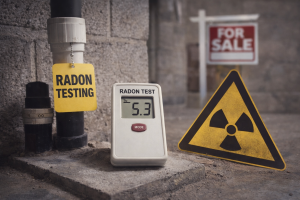
If radon is truly the second leading cause of lung cancer, why don’t we hear about it the way we hear about smoking, air pollution, or even mold? Why does the topic seem to surface mostly during home inspections and real estate transactions — then disappear from everyday conversation?
Many homeowners notice this contradiction. During a purchase, radon suddenly feels urgent, technical, and sometimes expensive. Outside a sale, it fades into the background. That disconnect fuels a legitimate question:
Is radon testing a critical public health measure — or mostly a liability-driven requirement tied to real estate?
The answer is complicated. The scientific evidence linking radon exposure to lung cancer is substantial, but the public messaging, economics, and regulatory landscape are far more nuanced than most homeowners realize.
This article walks through both sides — the science and the skepticism — so you can make an informed decision based on evidence rather than fear or dismissal.
Section 2: What the Science Actually Says
How Radon Causes Cancer
Radon is a naturally occurring radioactive gas produced when uranium in soil and rock breaks down. Outdoors it disperses quickly, but indoors it can accumulate — especially in basements and lower levels.
When inhaled, radon decays into radioactive particles that lodge in lung tissue, exposing cells to ionizing radiation over long periods. According to the CDC, cancer typically develops after years or decades of exposure, which is why people don’t notice symptoms until late stages.
Why It’s Called the “Second Leading Cause of Lung Cancer”
The U.S. Environmental Protection Agency (EPA) estimates that radon contributes to about 21,000 lung cancer deaths annually in the United States, making it second only to smoking.
- Radon is the leading cause of lung cancer among non-smokers.
- Roughly 13% of lung cancer deaths are attributed to radon exposure.
- Risk rises dramatically when radon exposure is combined with smoking — a synergistic effect, not merely additive.
The strongest evidence comes from:
- Studies of underground miners exposed to high radon levels.
- Large pooled residential studies in Europe, North America, and China showing increased lung cancer risk even at typical household exposure levels.
How Solid Is the Research?
The National Academy of Sciences’ BEIR VI report is widely considered the foundational scientific review on radon risk. It concluded that indoor radon is a significant public health concern and supported EPA risk estimates.
However, much of the early evidence originated from mining populations, which introduces uncertainty — miners were exposed to multiple hazards, not just radon. Researchers later addressed this through residential studies to refine risk estimates.
Section 3: The Case FOR Testing Your Home
1. It’s One of the Few Environmental Risks You Can Actually Measure
Unlike many air quality hazards, radon testing is relatively inexpensive and straightforward. Because radon has no smell or color, testing is the only way to know your level.
Health agencies emphasize that any home can have elevated radon, regardless of age or construction.
2. Geographic Risk Is Real — But Not Predictive for Individual Homes
About 1 in 15 U.S. homes are estimated to have elevated radon above the EPA action level of 4 pCi/L.
- Upper Midwest and Mountain states often show higher averages.
- Portions of the Midwest, including Missouri and Illinois, fall into moderate-to-high radon zones due to soil composition.
Even in low-risk areas, individual homes can test high — which is why agencies recommend testing rather than relying solely on maps.
3. Mitigation Can Reduce Exposure Quickly
Modern mitigation systems — typically sub-slab depressurization — can reduce radon levels significantly. Research suggests lowering indoor levels meaningfully reduces projected lung cancer risk over time.
4. Cost vs. Potential Health Risk
- DIY test kits: ~$15–$50
- Professional test: ~$150–$300
- Mitigation system: ~$800–$2,500 depending on home design
Compared with the long-term cost of lung cancer treatment — both financial and personal — advocates argue testing is a relatively low-risk decision.
Section 4: The Skeptical Perspective — Valid Questions About Radon
Why Is Awareness So Low Outside Real Estate?
Despite decades of scientific consensus, surveys show roughly 75% of Americans have never tested their homes and many aren’t concerned about radon exposure.
- Lung cancer is strongly associated with smoking, so environmental causes receive less attention.
- Radon doesn’t produce immediate symptoms or visible damage.
- Public health campaigns have historically focused on more preventable risks like tobacco use.
Is the Risk Overstated for Average Homes?
- Risk estimates rely heavily on statistical modeling rather than direct observation.
- Individual risk at moderate levels may be small, especially for non-smokers.
EPA risk charts show lifetime lung cancer risk for non-smokers exposed to 4 pCi/L at roughly 730 cases per million people, compared with far higher risks for smokers.
Why Does Radon Testing Appear During Sales?
Real estate transactions introduce legal liability. Testing during inspections provides:
- Documentation that buyers were informed.
- Protection against future claims.
The prominence of radon in home sales may reflect legal risk management as much as public health concern.
Scientific Controversies
- The exact risk level at lower exposures.
- Differences between miner data and residential environments.
- Variability in measurement methods.
Even skeptical researchers typically acknowledge some risk — the debate centers on magnitude, not existence.
Section 5: The Money Trail — Who Benefits?
The Radon Industry
- Inspectors and environmental testing companies
- Mitigation contractors
- Equipment manufacturers
Mitigation systems can cost thousands of dollars, leading critics to argue there is financial incentive to promote testing. The industry remains relatively small compared to sectors like HVAC or mold remediation.
Public Health Spending vs. Other Risks
Compared to anti-smoking campaigns, radon awareness receives far less funding and media attention. Smoking accounts for far more deaths annually, so public health messaging prioritizes behavior-based risks where interventions have greater impact.
This imbalance contributes to the perception that radon messaging appears primarily during real estate transactions.
Liability vs. Prevention
Disclosure laws in many states require sellers to inform buyers about radon risks or past testing. This framework emerged largely from consumer protection and liability concerns.
Section 6: What Current Homeowners Should Actually Do
1. Understand Your Personal Risk Profile
- You spend significant time in a basement or lower level.
- You live in a moderate-to-high radon region.
- Anyone in the household is a smoker or former smoker.
2. Treat Testing as Information, Not Panic
Testing doesn’t mean your home is unsafe — it simply provides data.
3. Reframe the Real Estate Angle
Yes, radon testing is common during home sales — but that doesn’t automatically make it unnecessary otherwise.
4. Make a Cost-Benefit Decision
- Would spending ~$20–$200 for testing give you peace of mind?
- If levels are elevated, would you realistically mitigate?
Final Thoughts: The Real Story Behind Radon
Radon sits in an unusual place in public health. The science linking it to lung cancer is strong enough that major organizations — including the EPA, CDC, and American Lung Association — consistently recommend testing.
- Radon is neither a conspiracy nor an emergency for every homeowner.
- It’s a measurable environmental risk whose significance varies widely by individual circumstance.
Testing your home isn’t about complying with a real estate checkbox. It’s about deciding whether you want information — and what you would do with it if the results come back high.
With almost 40 years in real estate, Sandie Hea has walked alongside homeowners through just about every inspection surprise and environmental question you can imagine — radon included. She’s helped clients sort through what really matters, what’s just noise, and how to make smart decisions without panic. After guiding countless families through negotiations, repairs, and “do we fix it or sell it as-is?” moments — and tackling plenty of renovations herself — Sandie brings a steady, practical voice to topics that can otherwise feel overwhelming.

Sandie Hea
🌐 SellYourStLouisHome.com
📧 sandie.hea@stlre.com
📞 314.806.1908
About the Author:
With nearly four decades of experience, Sandie Hea is known for providing clear guidance, honest counsel, and steady leadership in even the most complex real estate situations.