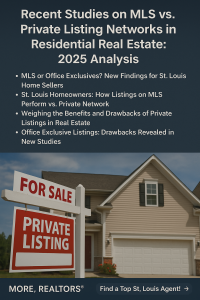
In a real estate market where access to information can make or break a deal, a recent statement from the Council of Multiple Listing Services (CMLS) reinforces a critical point: transparency is not optional, it is essential. CMLS, a national organization representing MLS systems across the country, issued a response to what it calls a “false narrative” suggesting that limiting listing exposure somehow benefits consumers. For buyers and sellers here in St. Louis, this hits close to home as discussions around office exclusive listings and off-market properties continue to grow.
CMLS made its position clear: “Real estate competition is built on transparency, equal access, and the ability for every buyer and seller to fully participate in the market.” :contentReference[oaicite:0]{index=0} That statement goes to the heart of how the MLS system works and why it has long been the foundation of a fair and competitive housing market. When listings are broadly shared, buyers get a complete picture of available homes, and sellers benefit from maximum exposure and competition.
However, there has been increasing momentum from some large firms to promote private listings, often referred to as “office exclusives” or “coming soon” listings that are not fully exposed to the market. These strategies are often framed as giving sellers more control or privacy. While there may be situations where limited exposure is appropriate, the broader trend raises legitimate concerns. As CMLS points out, “The result is reduced competition, a fragmented marketplace, and a lack of transparency, which harms consumers and makes it harder for real estate professionals to serve their clients.” :contentReference[oaicite:1]{index=1}
From my perspective, and based on decades in the St. Louis market, the issue is not whether these practices can exist, but whether they truly serve the client’s best interest. Agents have a fiduciary obligation to put their client’s interests ahead of their own. That means advising sellers on how to achieve the highest price and best terms, which in most cases comes from exposing the property to the widest possible audience. Limiting exposure may benefit a brokerage by allowing it to double-end a deal, but that does not necessarily benefit the seller.
CMLS addressed this concern directly, noting that some firms are attempting to “benefit from the marketplace that MLSs and other brokerages create without the same reciprocal contribution.” :contentReference[oaicite:2]{index=2} In other words, they want access to the shared system when it helps them, but also want to selectively withhold listings when it suits their business model. That kind of imbalance undermines the cooperative nature of the MLS and ultimately disadvantages smaller brokerages, newer agents, and most importantly, consumers.
Another key issue raised is the importance of complete and accurate data. Information like days on market, price changes, and listing history are not just technical details, they are critical tools for buyers and sellers making major financial decisions. CMLS emphasized that “complete, timely, and accurate listing information matters,” and even referenced the Department of Justice highlighting the importance of this data. :contentReference[oaicite:3]{index=3} When this information is hidden or selectively shared, it creates an uneven playing field.
Perhaps most concerning is that the information does not truly disappear when listings are kept off-market. Larger firms with advanced technology can still track and retain this data internally, meaning the advantage shifts to a select few. As CMLS explained, this leads to a situation where “key information would remain available to a few large brokerages and the buyers they represent, but not to newer and smaller competitors and their clients.” :contentReference[oaicite:4]{index=4} That is the opposite of a fair and open marketplace.
Here in St. Louis, where cooperation between brokerages has long been a strength of our market, maintaining transparency is especially important. An open MLS ensures that buyers do not have to chase listings across multiple platforms and that sellers can be confident their home is being seen by the full market. Moving toward a fragmented system of private listings risks creating confusion, inefficiency, and ultimately lower confidence in the process.
At MORE, REALTORS®, we strongly support a transparent, cooperative marketplace where all participants have equal access to information. While there may be niche situations for off-market listings, they should be the exception, not the norm, and always guided by what is truly best for the client, not what benefits the brokerage.
The bottom line is simple. Transparency fuels competition. Competition benefits consumers. And any move away from an open marketplace should be carefully examined to ensure it does not compromise the very principles that make real estate work for buyers and sellers alike.