Everyone thinks the hard part of buying or selling a home is getting under contract. It isn’t.
By the time a transaction reaches the closing stage, most buyers and sellers assume the difficult work is behind them. The contract is signed, inspections are resolved, and financing is in place. There is a natural sense that the finish line is near and that what remains is largely procedural.
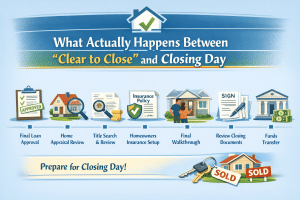
In reality, the final phase of a real estate transaction is often the most delicate. A closing is not a single event. It is a sequence of dependent steps, each requiring the previous one to be completed correctly, documented properly, and often timed with precision. When even one of those steps does not align, the entire process can stall.
A recent transaction highlighted just how sensitive this phase can be.
The property involved two sellers located in different counties, each represented by separate legal counsel. The parties were not on speaking terms, so all communication had to move through their respective attorneys. While not uncommon, this structure introduces additional layers that can slow the process and limit the ability to quickly resolve issues.
At one point, a court order was required before the transaction could proceed. The timing was driven by how the process is structured rather than by any individual’s pace. There was a mandatory waiting period before the order could be signed, and the judge executed it on the first day legally permitted.
An administrative issue followed. The document was processed with an incorrect date, which required correction and effectively reset the timeline. It was a simple administrative error, but one that carried real consequences for the closing schedule.
No one involved was acting in bad faith, and no one was ignoring the file. The delay was not the result of a single breakdown, but rather a reflection of how precise the process must be at this stage.
After the corrected documents were in place, the transaction moved forward again. Final documents were signed, including execution by one seller through a remote notary. The completed documents were then placed in a drop location intended for overnight delivery. However, that location was no longer being serviced by the carrier.
Several days passed before it became clear that the documents had not been retrieved or delivered. As a result, the title company did not receive the original, properly executed documents required to fund the transaction.
Without those originals, funding cannot occur.
From the outside, situations like this can feel unnecessary, especially when all parties have already signed and believe the transaction is complete. However, real estate transactions are not built on intention. They are built on verifiable, documented steps that must be completed in sequence.
Funding requires original documents. Original documents require proper delivery. Delivery requires the correct channel. Each step depends entirely on the one before it.
What matters for buyers and sellers is not the uniqueness of this particular situation, but the broader understanding it provides. The closing phase is not simply a formality. It is a process involving multiple parties, each operating within specific requirements and timelines, many of which are outside the control of any one participant.
Courts operate on defined schedules. Clerks process and record documents. Attorneys coordinate communication when parties cannot. Title companies are bound by strict requirements for funding and recording. Even something as routine as document delivery must be executed correctly for the process to continue.
Much of this work happens behind the scenes. Clients rarely see the volume of follow-up, verification, and coordination required to keep a transaction moving toward closing.
This is where experience becomes particularly important. The role is not only to negotiate terms or navigate inspections, but also to monitor the movement of documents, anticipate potential delays, and respond quickly when something does not progress as expected.
Most transactions do close without issue. When delays occur, they are rarely the result of one significant failure. More often, they stem from a series of small, necessary steps that did not align exactly as required.
In real estate, “almost done” is not done.
A transaction is only complete when every document has been properly signed, delivered, verified, and recorded.

Karen Moeller
STLKaren.com
Karen.McNeill@STLRE.com
314.678.7866
About the Author:
Karen Moeller is a St. Louis area REALTOR® with MORE, REALTORS® and a regular contributor to St. Louis Real Estate News, helping clients make informed, data-driven decisions.