When people talk about what drives home values, the same factors tend to dominate the conversation. Interest rates. Inventory. Schools. Taxes.
What receives far less attention is public park investment, even though in communities like Eureka, it plays a meaningful role in shaping buyer behavior and long-term market stability.
This is not about trendy amenities or short-term demand spikes. It is about how permanently protected land, trail systems, and outdoor infrastructure function as a form of market stability that does not fluctuate with economic cycles.
Parks as Fixed Infrastructure
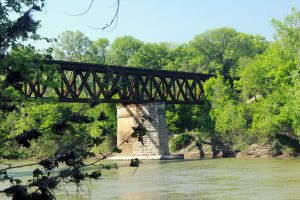
Route 66 Park – Eureka MO
In much of St. Louis County, parks are viewed as lifestyle enhancements. In Eureka, they operate more like infrastructure. The city sits alongside some of the region’s most significant protected green space, including Route 66 State Park, West Tyson County Park, and close proximity to Greensfelder County Park. These are not decorative neighborhood parks. They are large-scale public lands with long-term funding, maintenance commitments, and development protections already in place.
From a real estate perspective, that matters because protected land does three things simultaneously. It limits overdevelopment. It preserves neighborhood character. And it creates lasting value that cannot be replicated by private projects.
Once preserved, this land does not change. That permanence is part of its value.
Who This Attracts, and Why It Matters
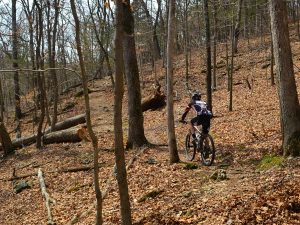
West Tyson County Park, St. Louis County, MO
Buyers choosing Eureka today tend to be deliberate. Many are actively seeking space, access to outdoor recreation, and a setting that feels insulated from development pressure.
That buyer profile often includes households who plan to stay longer, invest more in property upkeep, and make decisions based on long-term livability rather than short-term appreciation. These buyers behave differently in shifting markets. They are less likely to sell reactively and less likely to compete solely on price when buying.
Over time, that contributes to steadier turnover and more resilient pricing, even during broader market slowdowns.
Spending real time in these parks makes it clear how intentionally they are used, not as occasional destinations but as part of daily life. That level of integration tends to attract residents who are invested in place, not just property.
The Decisions That Already Shaped the Market
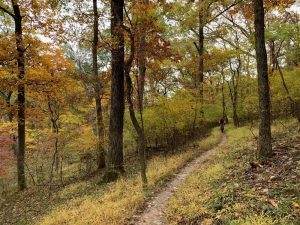 The park systems surrounding Eureka did not appear by accident. Their scale, connectivity, and permanence reflect long-term public choices about land preservation, floodplain protection, and recreational access.
Those decisions are now shaping residential behavior in ways that rarely show up in market statistics. Homes near protected green space tend to attract buyers with longer time horizons and stronger attachment to place. Demand in these areas often holds more consistently, even when broader conditions soften.
This kind of stability is not the result of a single initiative or ordinance. It is the cumulative effect of planning decisions made well before today’s market pressures emerged.
Why This Matters Beyond Eureka
Eureka is not an outlier so much as an example of how public investment decisions quietly shape residential markets.
As buyers become more selective and less reactive, communities with preserved assets and long-term planning frameworks may find themselves better positioned than those relying on constant growth or redevelopment to drive demand.
The most influential real estate decisions are not always zoning changes or new construction announcements. Sometimes they are the ones made years earlier, ensuring certain places remain fundamentally unchanged.
In a market where uncertainty has become a constant, that kind of certainty carries real value.
If you’re thinking about buying, selling, or exploring your options, I’m here to guide you with clarity and care.

Karen Moeller
🌐 STLKaren.com
📧 Karen.McNeill@STLRE.com
📞 314.678.7866
About the Author:
Karen Moeller is a St. Louis area REALTOR® with MORE, REALTORS® and a regular contributor to St. Louis Real Estate News, helping clients make informed, data-driven decisions.