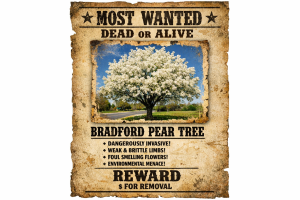
Why Missouri Is Asking Homeowners to Cut Down Bradford Pears And What To Plant Instead
If you have a Bradford pear tree in your yard, you are not alone. For years, it was one of the most commonly planted trees in St. Louis neighborhoods. Fast growing, symmetrical, and covered in white blooms every spring, it checked all the boxes.
Now the state of Missouri is asking homeowners to cut it down. Not trim it. Not manage it. Remove it. And in many cases, they are offering to replace it for free.
What Is Actually Happening
The Missouri Department of Conservation, along with the Missouri Invasive Plant Council and local partners like Forest ReLeaf of Missouri, is running an annual Callery pear “buyback” program.
Here is how it works:
Homeowners cut down a Bradford or Callery pear tree
Submit proof, usually a photo
Receive a free native tree in return
Registration typically opens in March, with tree pickup around Earth Day. The program has expanded over the past several years and continues to gain traction across Missouri.
This is not a symbolic effort. It is a coordinated push to remove a tree that has quietly become a statewide problem.
Why This Tree Fell Out of Favor
Bradford pears were originally marketed as the ideal suburban tree. The problem is what happens after they mature.
First, they are invasive. While the original Bradford cultivar was thought to be sterile, cross-pollination with other Callery pear varieties changed that. Birds spread the seeds, and now these trees show up everywhere from fence lines to highway medians.
Second, they are structurally weak. The same tight branching that gives them that perfect shape also makes them prone to splitting. If you have ever seen a tree snap in half after a spring storm, there is a good chance it was a Bradford pear.
Third, they create a maintenance and curb appeal issue over time. What looks neat and tidy at year five can look crowded, uneven, or damaged by year fifteen.
And yes, there is also the smell. If you know, you know.
Why This Matters for Homeowners
This is where it becomes more than a landscaping conversation. Trees are part of how buyers experience a property. They frame the home, affect light, influence maintenance expectations, and, in some cases, signal deferred issues. A mature Bradford pear in the front yard can raise quiet questions: is this tree close to failing? Has there been past storm damage? What will it cost me to remove this later?
It is not usually a deal breaker. But it can be one more thing that makes a buyer hesitate or mentally subtract from value.
On the flip side, a well-placed, healthy native tree reads differently. It feels intentional. Established. Low drama. That matters more than most sellers realize.
What Should You Plant Instead
If you are going to remove a tree, the replacement decision is where you can actually improve your property.
Here are strong options for St. Louis area homeowners that balance beauty, durability, and resale appeal:
Smaller Flowering Trees (Front Yard Friendly)
- Eastern Redbud: One of the best native choices for our area. Early spring color, manageable size, and fits well in most suburban lots.
- Flowering Dogwood: Classic and elegant. Works especially well in slightly shaded yards.
- Serviceberry (Juneberry): Underrated. Spring flowers, edible berries, and great fall color. Feels a little more custom than the typical builder pick.
Medium to Large Shade Trees (Long-Term Value)
- Swamp White Oak:Strong, adaptable, and built for Midwest weather. A long-term investment tree.
- Bur Oak: If you have space, this is a legacy tree. Extremely durable and impressive over time.
- Sugar Maple: Great fall color, but best in yards where soil and drainage support it.
What You Are Really Choosing
This is less about picking a “pretty tree” and more about choosing: Structure that holds up in storms, roots that behave predictably and growth that fits your lot long term. In other words, you are choosing fewer future problems.
The Part Most People Miss
The push to remove Bradford pears is not about aesthetics. It is about correcting a widespread planting decision that did not age well. And this is where homeowners have an opportunity. Most people will ignore the program. Some will think about it. A smaller group will actually take action. Those are the homes that, five to ten years from now, will quietly stand out. Not because they did something flashy, because they avoided something predictable.
Should You Do It
If your tree is young, healthy, and not causing issues, there is no urgency. If your tree is mature, starting to split, or planted too close to the house or driveway, it is worth serious consideration. And if the state is offering to help you replace it, that lowers the barrier quite a bit. At minimum, it is a conversation most homeowners did not realize they needed to have.
Thinking About How Your Home Shows Up to Buyers?
Small decisions compound over time. Trees, maintenance, layout, updates. They all shape how a home is perceived long before anyone talks about price.
If you are in Kirkwood or the surrounding St. Louis area and wondering what is helping or quietly hurting your home’s value, I am always happy to take a look and give you a real answer.

Karen Moeller
STLKaren.com
Karen.McNeill@STLRE.com
314.678.7866
About the Author:
Karen Moeller is a St. Louis area REALTOR® with MORE, REALTORS® and a regular contributor to St. Louis Real Estate News, helping clients make informed, data-driven decisions.



tadalafil 10mg
tadalafil 10mg
ivermectin for scabies
ivermectin for scabies
remeron 15 mg for depression
remeron 15 mg for depression
zoloft medication
zoloft medication
tadalafil buy philippines
tadalafil buy philippines
viagra prescription only
viagra prescription only
semaglutide compound vs ozempic dosage
semaglutide compound vs ozempic dosage
semaglutid tablett flashback
semaglutid tablett flashback
levitra pills online
levitra pills online
flagyl treatment dosage
flagyl treatment dosage
tadalafil woman reddit
tadalafil woman reddit
acyclovir vs valacyclovir for shingles
acyclovir vs valacyclovir for shingles
ivermectin explained
ivermectin explained
PDE5 inhibitor mechanism
PDE5 inhibitor mechanism
PDE5 inhibitor cost comparison
PDE5 inhibitor cost comparison
vardenafil full strength
vardenafil full strength
vardenafil vs sildenafil differences
vardenafil vs sildenafil differences
orlistat mechanism information
orlistat mechanism information
amoxicillin interaction risks explained
amoxicillin interaction risks explained
sinusitis congestion symptoms
sinusitis congestion symptoms
Sildenafil vs vardenafil tolerability
Sildenafil vs vardenafil tolerability
PDE5 treatment with tadalafil
PDE5 treatment with tadalafil