A listing tells you everything… until it doesn’t.
It does not take long for most buyers to form an opinion about a home they find online. A quick look at the price, a scroll through the photos, and within a minute or less, a decision starts to take shape.
If you want to see how quickly that happens, pull up any home and look at it the way you normally would:
At first glance, the information feels complete. The price is there, the photos are polished, and the basic details appear straightforward. It gives the impression that you understand what you are looking at.
That impression is often misleading.
Buyers naturally assume the price reflects what the home is worth, that the photos show the full picture, and that anything significant would be obvious. In reality, each of those assumptions has limits.
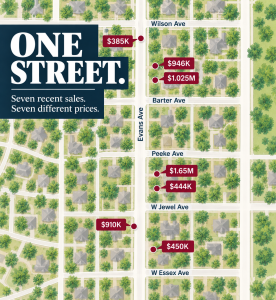
Pricing is often strategic. Some homes are intentionally positioned below market value to generate activity, while others are priced higher to test demand. Without context, the number alone rarely tells the full story.
The same is true for photos. They present the home at its best, carefully framed and edited. What they cannot show is how the layout feels in person, how the space flows from one room to another, or the elements that may not photograph well but become immediately noticeable during a showing.
Even the more objective details require interpretation. Square footage does not explain how a home lives. Days on market do not explain why a property has not sold. A clean and well-presented listing does not necessarily mean a straightforward transaction.
I was recently working with a buyer who dismissed a home because it appeared tight and somewhat awkward in the photos. When we saw it in person later that same day, the reaction was completely different. The layout felt open, the flow made sense, and the home quickly became one of their top choices. Nothing about the listing had changed, only the way the home was experienced.
That gap between perception and reality is where most misunderstandings begin.
The information available online is not wrong, but it is incomplete without context. Buyers often fill in those gaps with assumptions, and those assumptions can lead them away from the right property or toward one that does not hold up once they see it in person.
Looking at homes online is a useful starting point, but it should not be treated as a complete evaluation.
The more important skill is not just finding the information, but understanding what it does and does not tell you. In a market where small details can influence the outcome of a transaction, that distinction becomes more important than many buyers expect.
If something about a property feels too good, unclear, or simply does not add up, it is usually worth taking a closer look before moving forward.

Karen Moeller
STLKaren.com
Karen.McNeill@STLRE.com
314.678.7866
About the Author:
Karen Moeller is a St. Louis area REALTOR® with MORE, REALTORS® and a regular contributor to St. Louis Real Estate News, helping clients make informed, data-driven decisions.