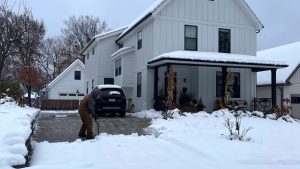
Here in Kirkwood, we woke up Thanksgiving morning to a blanket of snow. It was beautiful, at least until the rain started. As the snow became increasingly saturated, tree limbs began snapping and some residents found themselves without electricity. Suddenly, our homes were being put through a rather unplanned performance review.
As a real estate agent, it got me thinking about the conditions under which we typically shop for homes. We love sunny afternoons, natural light streaming through the windows and beautifully landscaped yards. Sellers certainly prefer those conditions, and understandably so. But if you really want to understand a house, Mother Nature occasionally makes a pretty good assistant.
One of the most revealing things about a property during significant precipitation is watching where the water goes. A beautifully landscaped yard may behave quite differently when the ground is saturated and the snow begins to melt.
Are the gutters overflowing? Is water collecting against the foundation? Does the driveway direct runoff toward the garage? Is the drain outside the walkout basement keeping up? Are the window wells collecting water?
These are things that can be difficult to fully assess during dry weather. Even a yard that appears relatively level may have subtle grading issues that become much more apparent when water starts moving across it. And while buyers tend to focus on whether a basement is finished, I would argue that understanding how it stays dry is considerably more important than what kind of flooring is down there.
Weather can be equally revealing inside the house. Those gorgeous floor-to-ceiling windows may be one of the reasons you fell in love with a property, but how comfortable is that room on a cold, windy day? An upstairs bedroom tucked beneath the roofline might feel perfectly comfortable during a spring showing and considerably less inviting in January.
Cold weather can draw attention to drafts, condensation and differences in temperature between rooms. There may be perfectly reasonable solutions to these issues, but they are worth understanding before purchasing. After all, you are buying the house for all four St. Louis seasons, sometimes all of which seem determined to show up in the same week.
A professional home inspection is an important part of the buying process, but it is worth understanding its limitations. The American Society of Home Inspectors’ Standard of Practice describes an inspection as an evaluation of accessible, observable systems and components based on their condition at the time of the inspection. Those last few words matter.
An inspector may identify potential drainage concerns without witnessing how the property responds to prolonged rainfall. A basement may show evidence of previous moisture intrusion without actively leaking on inspection day. The absence of water in a basement during an inspection does not necessarily mean the basement has never taken on water.
Of course, weather can work against us, too. Snow may conceal roofing materials, driveway cracks, grading and other exterior conditions. The InterNACHI Standards of Practice specifically state that inspectors are not required to remove snow or ice to inspect roof surfaces. Understanding what could not be evaluated during an inspection can be just as important as reading about what was.
I’m certainly not suggesting that anyone venture out during dangerous weather to look at real estate. However, once conditions are safe, there can be considerable value in revisiting a property after substantial rain or snowmelt, particularly if you have concerns about drainage or moisture.
Ask sellers how the property has performed during significant weather events. Has the basement ever taken on water? How frequently does the sump pump run? Does it have a battery backup? Have there been recurring issues with drainage, ice accumulation or uneven heating? The seller’s disclosure is a good starting point, but it doesn’t have to be the end of the conversation.
If weather prevents your inspector from evaluating certain areas, discuss whether a follow-up inspection or specialized evaluation is appropriate and whether it can be accommodated within your contractual deadlines.
Anyone who has worked with me for any length of time has probably heard me say that a Pottery Barn house can only be found in the pages of the magazine. No house is perfect, regardless of its age, price or how beautifully it photographs. Every home comes with its own quirks, maintenance obligations and occasional surprises.
The purpose of looking at a house through the lens of adverse weather isn’t to find reasons not to buy it. It’s to better understand what you’re buying, what you may need to address and what you should budget for down the road.
We spend a great deal of time assessing how a house looks when we buy it. Perhaps we should spend a little more time considering how it lives when the weather stops cooperating.

Karen Moeller
STLKaren.com
Karen.Moeller@stlre.com
314.678.7866
About the Author:
Karen Moeller is a St. Louis area REALTOR® with MORE, REALTORS® and a regular contributor to St. Louis Real Estate News, helping clients make informed, data-driven decisions.