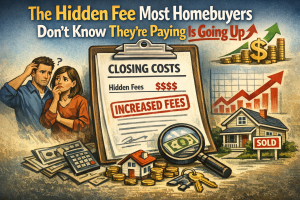
Credit report and scoring costs are rising and now drawing regulatory attention, adding yet another layer to today’s affordability challenge.
The Hidden Cost of Getting a Mortgage Is Getting More Attention
At a time when affordability is already stretched, there is growing scrutiny around a cost most buyers never think twice about: the price of their credit score.
Recent attention from policymakers, including Josh Hawley, has brought new focus to how credit scores are priced and used in mortgage lending. A request has also been made for the Federal Trade Commission to review whether current practices limit competition.
This is not about politics. It is about cost transparency in a process that affects nearly every homebuyer.
Yes, You Are Paying for Your Credit Score
When you apply for a mortgage, your lender pulls what is called a tri-merge credit report. This includes scores from multiple credit bureaus and is required for most loan approvals. That cost does not get absorbed by the lender. It is passed directly to the buyer. And recently, those costs have been increasing, especially for applications involving more than one borrower.
On its own, it may not seem significant. But layered into a process already filled with expenses, it becomes one more line item that buyers feel.
Why This Is Getting Attention
The discussion is not just about rising prices. It is about how the system is structured. FICO scores are widely used across the mortgage industry and are built into guidelines tied to Fannie Mae and Freddie Mac. Because of that, buyers and lenders have limited flexibility to use alternative scoring models, even as costs change. That does not suggest anything improper on its own. But it does raise reasonable questions about pricing and competition, which is why regulators are being asked to take a closer look.
Why This Matters in St. Louis
In a market like St. Louis, where many buyers are carefully balancing upfront costs and monthly payments, every additional expense matters. First-time buyers are often the most impacted. They are already navigating down payments, inspections, insurance, and closing costs. Even a few hundred dollars more can influence timing or decision-making.
Move-up buyers feel it too. While they may have equity, the overall cost of transacting has increased across the board. This is one of those costs that rarely shows up in headlines but still shows up on the closing statement.
The Bigger Picture
Affordability conversations tend to focus on home prices and interest rates. Those are still the biggest drivers, but there is growing awareness around the smaller, less visible costs that shape the real experience of buying a home. This moment is less about any single company or policy and more about understanding how all parts of the process contribute to what buyers ultimately pay.
What Buyers Should Do
There is no immediate action required from buyers based on this issue alone. What does matter is awareness. Ask your lender early for a full breakdown of upfront costs, including credit report fees. Understand how multiple borrowers impact pricing. And work with professionals who help you see the full picture before you commit. Because in today’s market, the buyers who win are often the ones who understand the details others overlook.

Karen Moeller
STLKaren.com
Karen.McNeill@STLRE.com
314.678.7866
About the Author:
Karen Moeller is a St. Louis area REALTOR® with MORE, REALTORS® and a regular contributor to St. Louis Real Estate News, helping clients make informed, data-driven decisions.


hello world
hello world
sildenafil for dogs
sildenafil for dogs
finasteride
finasteride
ciproflox
ciproflox
stendra 200 mg cost
stendra 200 mg cost