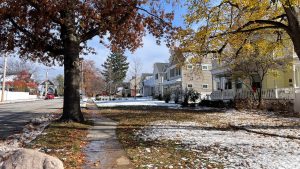
One of the things I love about walking through Kirkwood is that the neighborhood doesn’t look as though it was built in a single afternoon. The houses reflect different architectural styles, the landscaping has had decades to establish itself and mature trees stretch across streets that have witnessed generations of homeowners come and go.
These are qualities that many buyers specifically seek when looking for a home. You can build a beautiful house in a matter of months, but you can’t grow a hundred-year-old oak tree on the same construction schedule.
What we sometimes overlook is that when we purchase a house, we inherit more than the decisions made by its previous owners. We also inherit some of the decisions made by developers, municipalities and generations of neighboring property owners. That is true even when the house itself is brand-new.
Consider two newly constructed homes, one built on a lot in an established neighborhood and another in a newly developed subdivision. Both may have comparable finishes, energy-efficient systems and modern floor plans, yet the environment surrounding each house could be considerably different.
One may be surrounded by mature trees, decades-old infrastructure and neighboring properties built under entirely different construction standards. The other may have newly installed infrastructure and landscaping that has yet to mature. Neither is inherently better, but the responsibilities associated with owning each can be quite different.
Even something as seemingly straightforward as the tree in front of your house deserves a closer look. Depending on its location, it may fall under municipal maintenance responsibilities rather than your own. Here in Kirkwood, the city’s Forestry Division has established a program to prune public trees on an eight-year cycle. Other municipalities may handle public tree maintenance quite differently.
Some of the less visible distinctions are quite literally beneath our feet. A house may be marketed as completely renovated, yet relatively little is known about the pipe carrying wastewater from that house to the public sewer main. A beautifully remodeled bathroom may still be connected to infrastructure that predates the people purchasing the property by several decades. Even when purchasing new construction in an established neighborhood, it’s worth asking whether the existing sewer lateral was replaced.
Two homeowners experiencing essentially the same sewer lateral problem could face considerably different expenses simply because of where they live. Under Kirkwood’s Sewer Lateral Repair Insurance Program, the city pays 75 percent of qualifying, approved repair costs based on the lowest bid from a city-approved contractor. The program has specific eligibility requirements and exclusions, including routine root removal and repairs to new homes when the problem is identified within five years of construction completion.
Other municipalities may offer different levels of assistance, impose different eligibility requirements or have no comparable program at all. It’s an example of how understanding the community in which you’re purchasing can be just as financially relevant as understanding the condition of the house itself.
We tend to compare homes based on square footage, finishes, lot size and purchase price. Rarely do we give the same consideration to the municipal services, infrastructure and maintenance responsibilities that accompany the property. Yet these distinctions can influence both the cost and experience of homeownership long after the closing.
None of this diminishes my appreciation for established neighborhoods. Quite the opposite. Part of what makes these communities appealing is the investment that generations of residents have made in their homes, their landscapes and their surroundings.
When we purchase a home in an established neighborhood, we benefit from decisions made by people who lived there long before us. We also inherit the opportunity to make thoughtful decisions that will benefit the people who live there long after us.
That is one of the things I particularly appreciate about living in Kirkwood. A neighborhood is never really finished. Each generation of homeowners contributes a little more to what the next generation will inherit.

Karen Moeller
STLKaren.com
Karen.McNeill@stlre.com
314.678.7866
About the Author:
Karen Moeller is a St. Louis area REALTOR® with MORE, REALTORS® and a regular contributor to St. Louis Real Estate News, helping clients make informed, data-driven decisions.